
Active Warrants in Lake County
Warrants in Lake County are issued by the courts and enforced by the sheriff. The Sheriff's Warrant Division enters and clears misdemeanor and felony warrants in the IDACS and NCIC systems, keeps the active outstanding-warrant file, and searches for and arrests people wanted in the county. The division also handles extradition with the prosecutor's authorization and processes people who surrender on a warrant.
The public warrant list is built to share information about people wanted by law enforcement in the county. It draws from criminal and civil court proceedings, so the same list can hold both kinds of warrant. The sheriff warns that the data may not be current because of process and technical data-transfer issues, and that any address shown reflects the warrant as the court issued it.
The Warrant Division explains its duties on the sheriff warrant division page.
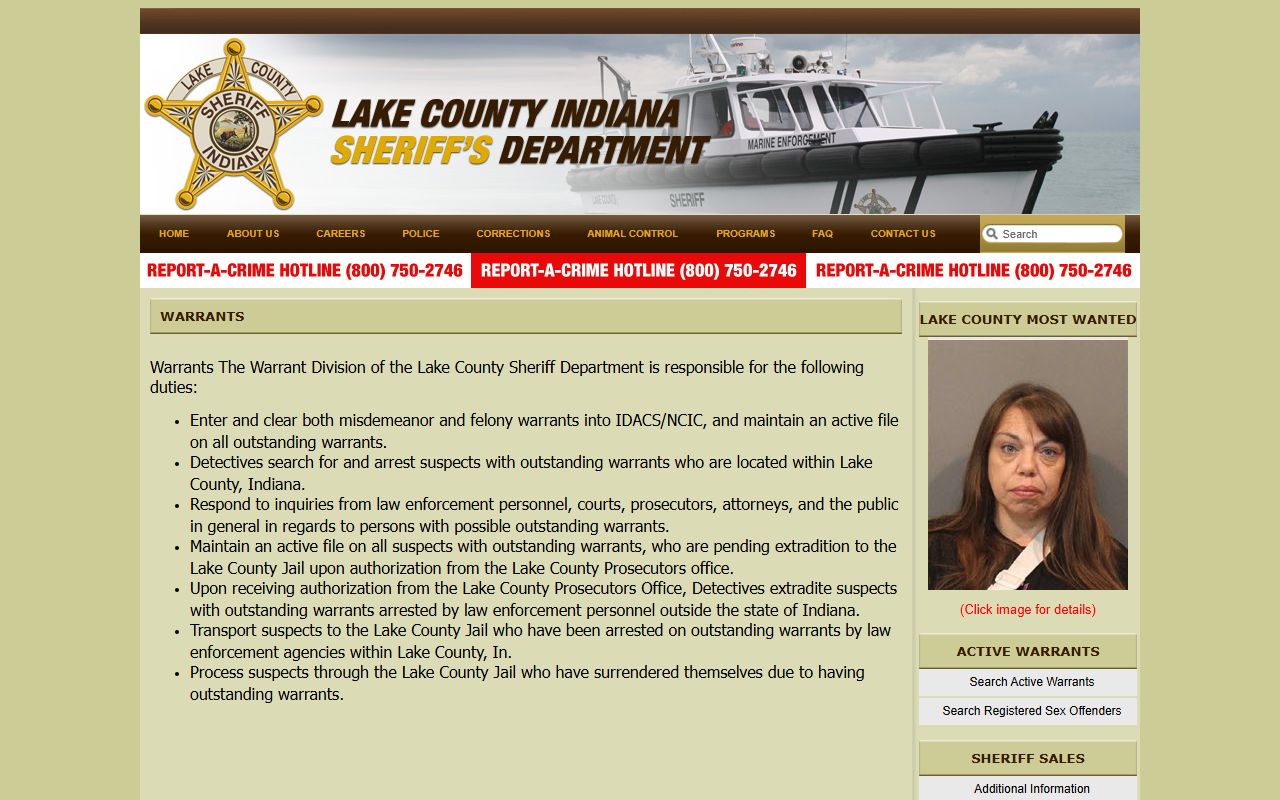
That page is the official starting point for warrant questions in the county.
Types of Warrants in Lake County
Warrants come in a few forms, and the public list can include both criminal and civil ones. Knowing the type helps you understand why a warrant exists and what resolving it may take.
- Arrest warrant - issued when there is probable cause to believe a person committed a crime.
- Bench warrant - issued by a judge when someone misses a court date or violates an order.
- Search warrant - authorizes officers to search a place or property; not part of the public wanted list.
- Capias or failure-to-appear - a court order to bring in a person who did not appear or comply.
Note: A civil warrant on the list may come from a civil court proceeding rather than a criminal charge, so the reason behind a listing is not always criminal.
How to Search Lake County Warrants
The sheriff hosts the active warrant search. You must accept a disclaimer before you can enter, then you can search by name or by ZIP code. The disclaimer repeats that a listing is not proof of guilt and that the public should not try to make an arrest.
- Open the warrant search disclaimer page and accept the conditions.
- Search by last name, adding a first name for common surnames.
- Or switch to a ZIP code search to see warrants tied to an area.
The disclaimer and its warnings appear on the sheriff's warrant page before you reach the search form.
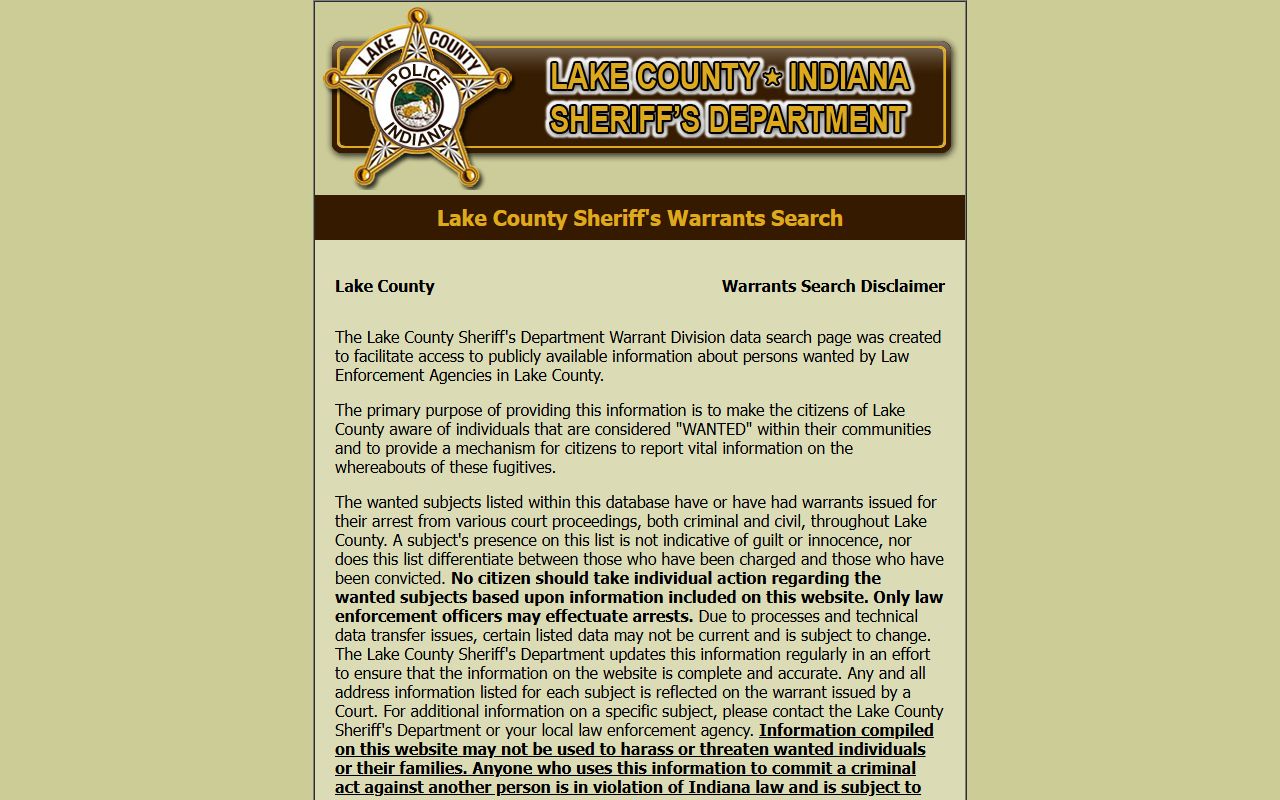
Accepting the disclaimer is required because the data can lag and a listing does not confirm a current warrant.
Lake County Warrant Search Fields
The search form is simple. Names must use letters only, with no spaces, hyphens, or other characters. The ZIP search uses a long dropdown that includes Lake County and nearby areas. The table lists the fields you will see.
| Field Label | Type | Required | Notes |
|---|---|---|---|
| Disclaimer Accept | Button | Yes | You must accept the conditions to reach the search. |
| Last Name | Text | Yes for name search | No spaces, hyphens, or non-alphabetic characters. |
| First Name | Text | No | Recommended for common last names. |
| ZIP Code | Dropdown | Yes for ZIP search | Pick from the list of Lake County and area ZIPs. |
What a Lake County Warrant Record Shows
A warrant listing carries limited information, and the sheriff is careful about what it guarantees. Based on the public search and its disclaimer, a result may show the fields below. It will not give you a full case file.
| Field | What It Shows |
|---|---|
| Subject Name | The name of the person wanted on the warrant. |
| Address or ZIP | The location reflected on the warrant as the court issued it. |
| Warrant Status | That the warrant is active or outstanding. |
| Issuing Source | The court or proceeding the warrant came from. |
| Criminal or Civil Origin | Whether the warrant arose from a criminal or civil matter. |
| Disclaimer | That a listing is not proof of guilt and may not be current. |
For charges and case detail behind a warrant, the court file is the better source, covered on the Lake County court records page.
What to Do If You Have an Outstanding Warrant
If you think you have a warrant, do not try to handle it through a confrontation or a self-help arrest. Confirm it first, then get advice. The sheriff's data can lag, so a listing may be out of date in either direction.
- Search the sheriff's portal by name or ZIP to check for a listing.
- Verify with the Warrant Division at (219) 755-3057, since the online data can lag.
- Talk to an attorney if the warrant ties to charges, a missed court date, probation, or extradition.
- If you surrender, follow the Warrant Division's instructions; the division processes people who turn themselves in.
- Confirm the warrant is cleared after you resolve it, since technical updates to the list can lag.
Important: Speak with a lawyer before you surrender on a warrant, because bond, charges, and court terms depend on the specific order.
Reporting Tips to the Warrant Division
The sheriff invites tips on people wanted in the county. The Warrant Division can be reached around the clock by phone or email for information and tips, and the same number handles reports of inaccurate listings during business hours, 8:00 AM to 4:00 PM on weekdays. Do not approach a wanted person yourself. Pass what you know to the division and let officers act on it. Tips can help clear an outstanding warrant safely, but the arrest itself is always left to trained law enforcement.
The sheriff's broader site links warrants, the offender registry, and victim notification for anyone tracking a case, and the warrant tools all sit under the sheriff's main site.
Warrants and Lake County Court Cases
A warrant rarely stands alone. Most tie back to a court case, whether a criminal charge in the Superior Court or a civil matter handled elsewhere in the county system. When a warrant connects to a filed case, the case itself usually appears in Indiana MyCase, where you can read the charge or the order that led to the warrant. The sheriff's list tells you a warrant exists; the court file tells you why.
The Warrant Division also fields questions from many sides. It responds to inquiries from law enforcement, courts, prosecutors, attorneys, and the public, and it keeps files for people pending extradition into the Lake County Jail. If a bench warrant came from a missed hearing, clearing the underlying case is often the real fix, not just contacting the sheriff. Court terms, bond, and any payment depend on the order that produced the warrant. An attorney can often arrange to resolve the case and have the warrant lifted in a single court appearance.
Warrants Across a Cross-Border Metro
Lake County sits in Indiana's northwest corner, inside the Chicago metropolitan area, bordered by Lake Michigan and Cook County. That location shapes warrant work. People wanted on Lake County warrants may live or work across state lines, which is why the Warrant Division handles extradition with the prosecutor's authorization and transports people arrested on outstanding warrants.
The county police also run a dedicated Warrants unit among their specialty divisions. For the public, the practical point is simple: a Lake County warrant can reach beyond the county, and resolving one may involve more than a single local court. When in doubt, verify with the division and get legal advice early.
Restricted Lake County Warrant Records
Not every warrant appears on the public list. Sealed warrants and grand-jury matters are not available before they are executed or unsealed. Juvenile warrants are restricted under Indiana juvenile law. Federal warrants are separate and route through federal agencies, not the county sheriff.
Be wary of third-party warrant sites as well. They often copy old data, miss recent clearances, and may charge fees. The sheriff's own tool is the only official county source, and even it carries the lag warning. When accuracy matters, confirm directly with the Warrant Division rather than trusting a private site.
The public search form itself is the last step after the disclaimer, and it is shown on the sheriff's active warrant page.
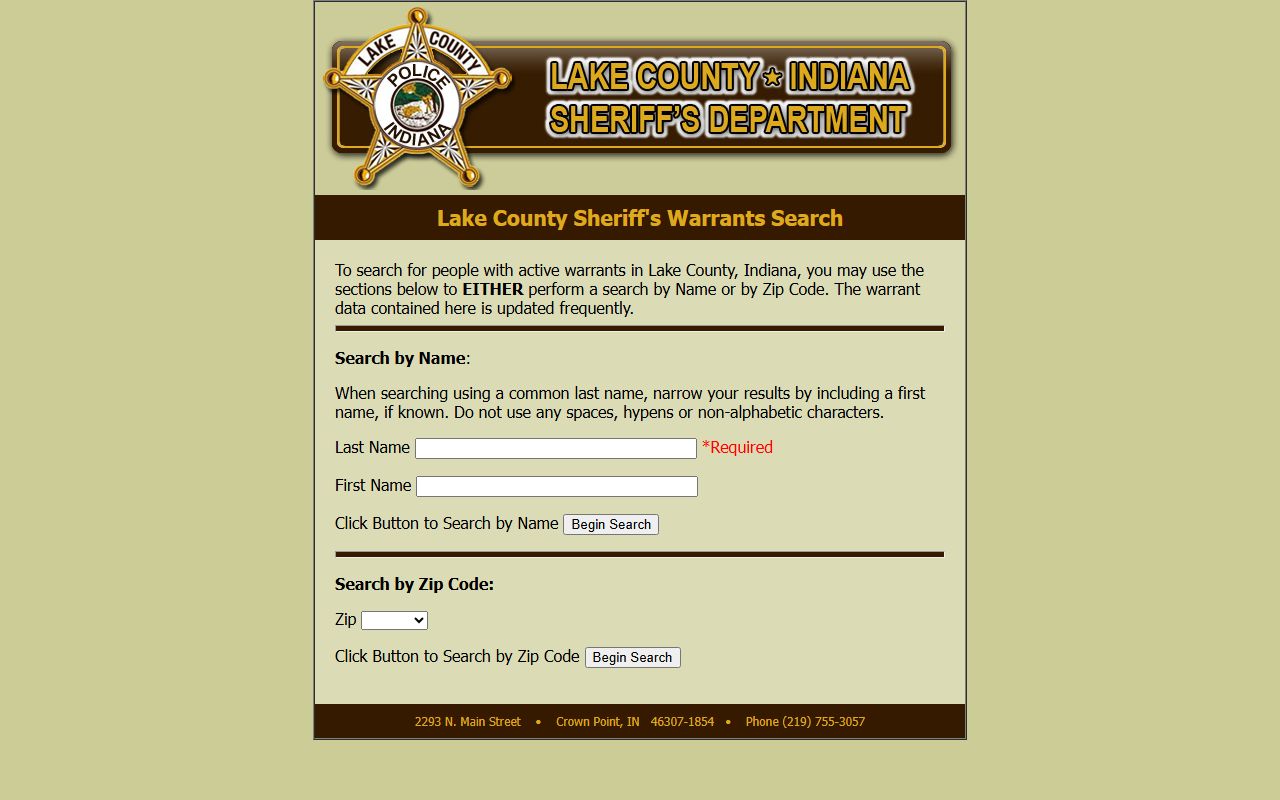
From that form you can run a name or ZIP search once the disclaimer is accepted.