
About the Lake County Clerk's Office
The Clerk of the Lake Circuit/Superior Court is led by Michael A. Brown, with Shawn Miller serving as Executive Chief Deputy. The main office sits on the first floor of the Courts Building in Crown Point, the same complex that houses the Circuit Court, the prosecutor, and sheriff administration. The clerk also keeps branch counters in Hammond and East Chicago and at the Juvenile Justice Complex.
Clerk of the Lake Circuit/Superior Court
2293 N. Main Street, 1st Floor
Crown Point, IN 46307
(219) 755-3460
Fax (219) 755-3520
Clerk Office Locations
The clerk does not work from one counter alone. Beyond the Crown Point main office, the clerk staffs branch locations in Hammond and East Chicago and at the Juvenile Justice Complex. That spread matches the courts, which sit in several cities across the county. The table lists the branch offices and their numbers.
| Location | Address | Phone |
|---|---|---|
| Hammond | 232 Russell Street, Hammond, IN 46320 | (219) 933-2857 |
| East Chicago | 3711 Main Street, East Chicago, IN 46312 | (219) 398-2442 |
| Juvenile Justice Complex | 3000 W. 93rd Ave, Crown Point, IN 46307 | (219) 660-6900 |
The Crown Point main office remains the central counter for most filings and certified copies, but a nearer branch can save a trip for some requests.
What the Clerk Does in Lake County
The clerk is a ministerial officer and the custodian of the court's records and seal. The office handles the paperwork that keeps the courts running, from the first filing in a case to the certified copy a party needs at the end. Its core duties are wide.
- Accepts filings that begin litigation and enters the court's judgments and orders.
- Acts as custodian of the clerk's record and the court seal.
- Issues process, such as summonses, in pending cases.
- Makes certified copies of records and issues miscellaneous licenses.
- Keeps the record of all wills and trust matters in probate proceedings.
- Receives money paid to the court in its official capacity.
Because the clerk touches nearly every case, it is the first call for questions about filing, copies, and payments in the Circuit and Superior Court. The office also performs the official duties imposed on it by statute and by the court, which is why its responsibilities range from entering judgments to keeping the record of wills.
How to Request a Certified Copy
For anything official, you need a certified copy from the clerk, since the online portal is not the official record. The process is short once you know the case.
- Identify the case, with a case number if you have one.
- Contact or visit the clerk's office that holds the record.
- Tell the clerk which document you need and that you want it certified.
- Show valid identification and pay the copy and certification fee.
- Receive the certified copy, which courts and agencies accept as official.
The clerk's fee and case-code details appear on the court costs and filing fees page.
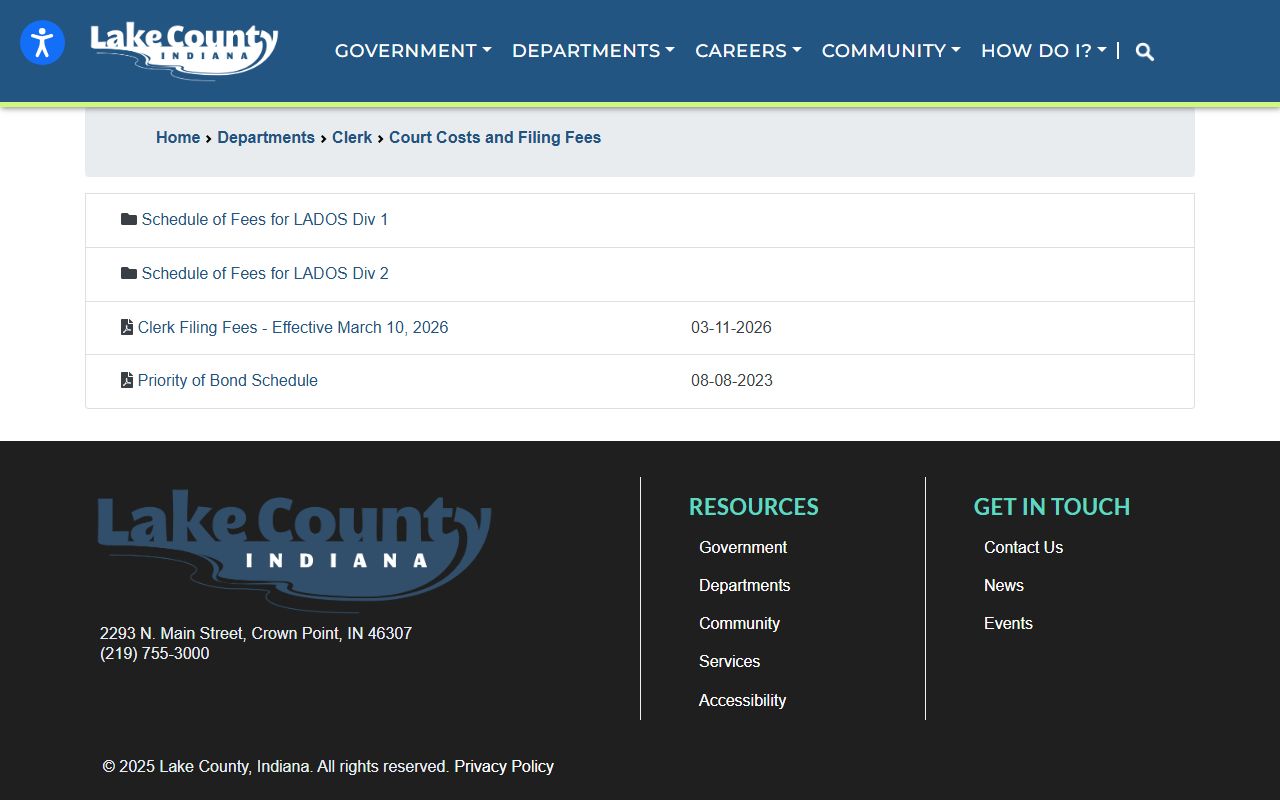
That page links the current fee schedules, including the filing fees effective March 10, 2026.
Records Request Details
A clerk request goes faster when you bring the right information. There is no single statewide form, so a clear request with these details works best.
| Field | Required | Notes |
|---|---|---|
| Requester name and contact | Yes | So the clerk can reach you. |
| Case or record description | Yes | Names, parties, or the document you want. |
| Case number | No | Speeds the search if you have it. |
| Copy type | Yes | Plain copy or certified copy. |
| Payment | Yes | Cash or money order at the counter; cards in person only. |
Lake County Clerk Fees
The clerk lists its filing costs by case-type code. The most common filings and their fees are below. Each amount is set by the clerk's published schedule.
| Item | Amount |
|---|---|
| Divorce filing (DN or DC) | $177 |
| Probate filing (EU, EM, ES, GU, GM, TR) | $177 |
| Civil filing (CC, CT, PL, MF, MI, AD) | $157 |
| Each additional defendant | $10 |
| Sheriff service of process | $28 |
| Credit card convenience fee | 3% |
Probate and civil filings can add the optional $28 sheriff service fee when the sheriff serves the papers.
Clerk Payment Rules
How you pay depends on how you file. Cases filed at the counter must be paid by cash or money order, while e-filed cases can use electronic payment. Major credit cards are accepted for in-person, face-to-face transactions only, and your valid ID must show a first and last name matching the card. American Express is not accepted, and a 3% convenience fee is added by the payment processor.
Planning the payment method before you go avoids a wasted trip. A money order is the safest bet for a counter filing, and a card works only if you are paying in person. If you are paying online through e-filing or the state portal, electronic payment handles it, and the card rules that apply at the counter do not come into play. When in doubt about a specific fee or accepted method, a quick call to the clerk before you visit settles it.
Common Clerk Forms
The clerk publishes the starting forms for small-claims matters, which are some of the most common filings the public handles without a lawyer. The forms page lists the current versions.
- Car Title Notice of Claim.
- Money Owing Notice of Claim.
- Eviction Notice of Claim.
- A sample Money Owing Notice of Claim to model your own.
The forms are posted on the clerk forms page.
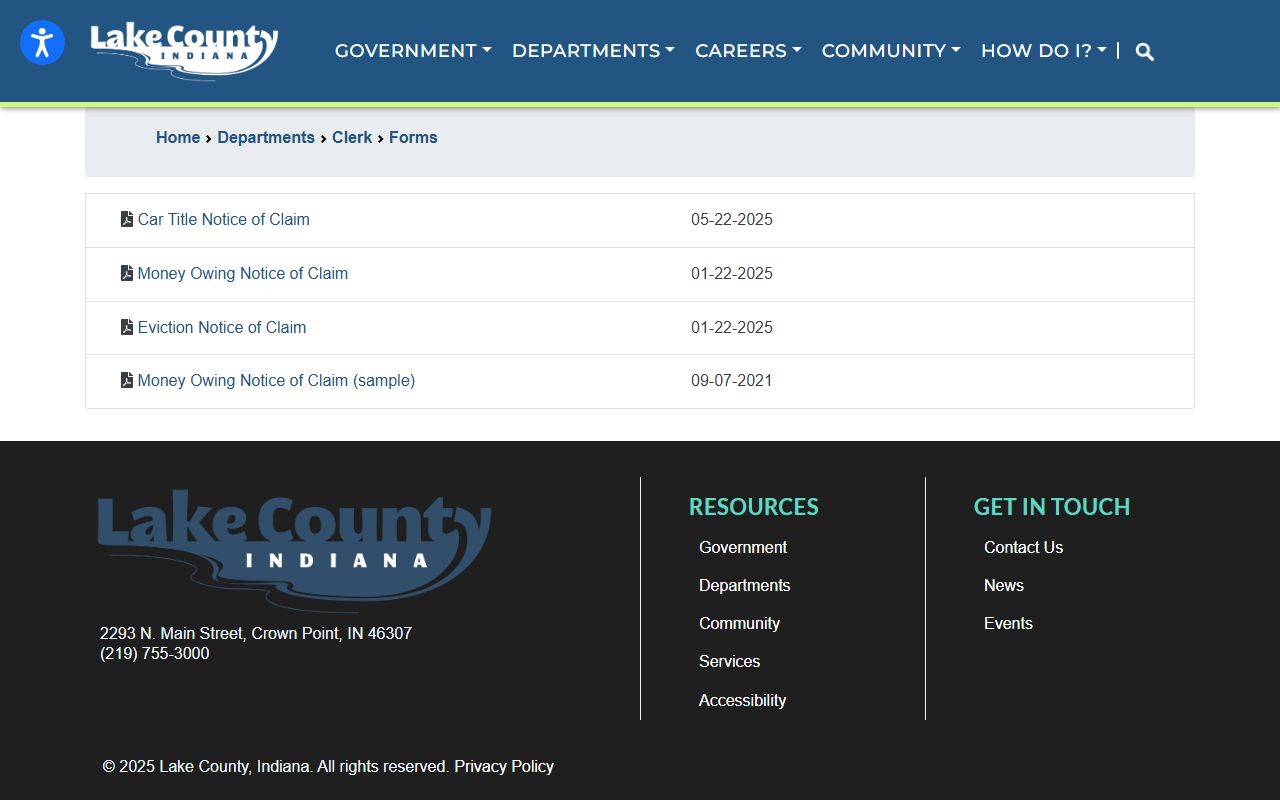
For self-help beyond these forms, Indiana Legal Help offers statewide guidance the clerk pages link. The notice-of-claim forms cover the most common small-claims situations, a disputed car title, money owed, and eviction, so many filers can start a case without a lawyer using the clerk's posted versions. Each form is dated, so check that you are using the current version before you file, and the clerk can confirm which form fits your situation.
Mail and Online Filings
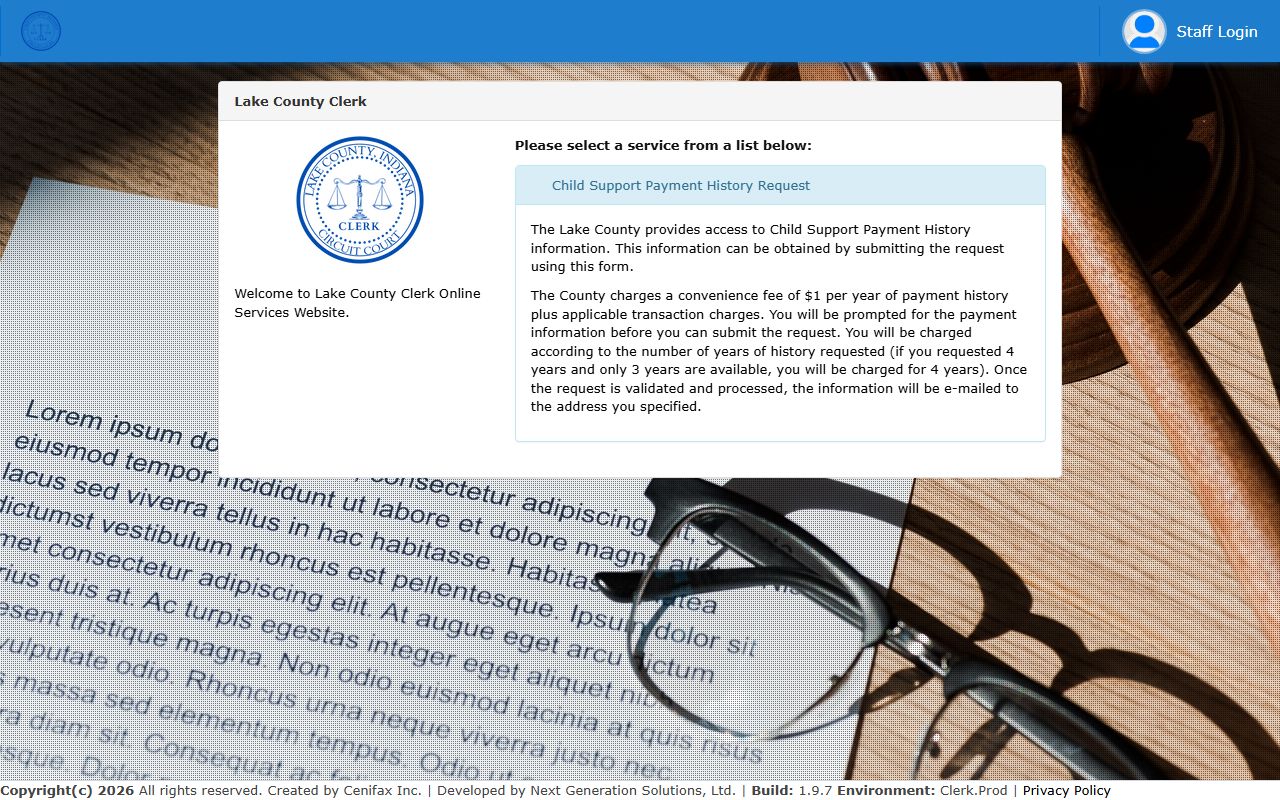
Much of the clerk's work now runs online. Case search and traffic-ticket payment route to the statewide court portal, and the county links a child support payment history request through a clerk site. E-filing is the standard path for many case types, with counter filing still available.
The county links a child support payment history request through the clerk's online service.
For case lookups and most record searches, the clerk points to Indiana MyCase rather than a county-built database.
It is worth repeating that the online tools are for convenience, not for official copies. MyCase itself states that its information is not the official court record and may contain errors, and that official records come only from the court that maintains them. So the online portal is the place to find and track a case, while the clerk remains the place to get a certified, official version of any document. The two work together rather than replacing each other.
Marriage and Probate Functions
The clerk's role reaches beyond ordinary case files. As the office that issues miscellaneous licenses, the clerk handles marriage licenses, and the county's "Get a Copy of Marriage License" route points back to the clerk for copies. On the probate side, the clerk keeps the record of all wills and trust matters, which makes it the place to confirm a will admitted to probate or to obtain certified estate orders.
These functions tie the clerk to some of the most personal records a county keeps. A family settling an estate, a couple applying to marry, and a party finishing a divorce all pass through the same office. For the details on each, see the marriage and divorce records and probate records pages.