
Indiana Access to Public Records Act
Indiana's open-records law is the Access to Public Records Act, codified at Indiana Code 5-14-3. It applies broadly to public agencies and covers writings, reports, maps, recordings, photographs, and other agency records unless a record is confidential or otherwise non-disclosable. The law declares public access an essential function of government and places the burden of proving secrecy on the agency, not on the person asking.
Two parts of the law are worth knowing. Indiana Code 5-14-3-1 sets the public policy and the burden of proof, declaring open access essential and putting the duty to justify secrecy on the agency. Indiana Code 5-14-3-3 is the operational section that supports the right to inspect and copy agency records. Together they make openness the starting point for any request.
When a record holds both disclosable and protected material, the agency must separate the two and release what it can. The statute is hosted on the Indiana Public Access Counselor statutes page.
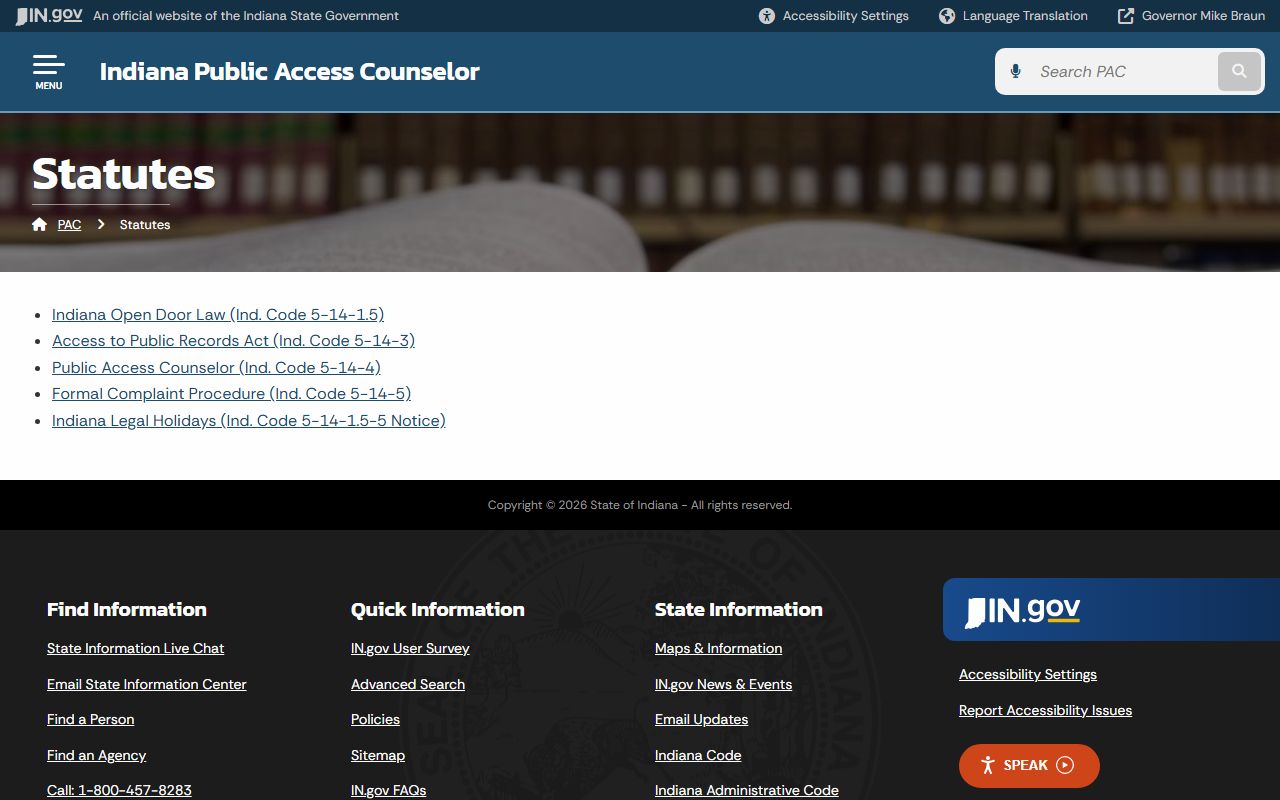
That page links the full open-records law and the related access statutes a Lake County requester relies on.
What Records the County Clerk Maintains
The county keeps records in many offices, and the right one depends on the document. The Clerk of the Lake Circuit/Superior Court is the custodian of court records and the court seal, accepts filings, enters judgments and orders, makes certified copies, issues miscellaneous licenses, and keeps the record of wills and trust matters in probate. Court records themselves route through the court rules rather than a general agency request.
The sheriff is another frequent stop. Its Bureau of Identification handles background checks and accident reports for the public, on set days and for a fixed fee, separate from any court file. Other records sit with the county departments that create them. The list below shows the kinds of records people most often seek and where they tend to live.
- Court case records - through the clerk and the statewide court records portal.
- Marriage and probate records - marriage and probate matters kept by the clerk.
- Sheriff and jail records - background checks, accident reports, and warrant information.
- Agency records - reports and documents held by county departments under the open-records law.
Court Records vs Agency Records
One of the most common mistakes is sending a court-record request through the open-records law. The two paths are different, and using the wrong one slows you down. The comparison sorts them out.
| Court Records | Agency Records | |
|---|---|---|
| Governed by | Rules on Access to Court Records | Access to Public Records Act |
| Where to ask | Clerk of the Circuit/Superior Court | The agency that holds the record |
| Examples | Case files, dockets, judgments | Reports, contracts, sheriff records |
| Online tool | Indiana MyCase | Varies by agency |
If you are after a case file, start with the clerk and the court portal rather than an open-records request.
How to File a Public Records Request in Lake County
Filing is straightforward once you know which office holds the record. A request can be made in person, in writing, or by email, fax, or mail to the agency that keeps the document. Be specific about what you want, because a narrow request is easier and faster to fill.
- Identify the office that holds the record, such as the clerk, the sheriff, or a county department.
- Describe the record clearly, with names, dates, or case numbers if you have them.
- Submit the request in person, by email, fax, or mail.
- State how you want the record, whether to inspect it or receive copies.
- Pay any copying fee the agency charges before you collect copies.
Note: Court records are an exception and follow the court rules through the clerk, not a general agency request.
Public Records Request Details
Indiana does not require a single statewide form, so agencies accept plain requests. Still, a good request carries the same core details every time. The table lists what to include.
| Field | Required | Notes |
|---|---|---|
| Requester contact | Yes | A name and a way to reach you with the response. |
| Record description | Yes | What you want, as specific as possible. |
| Date or case reference | No | Names, dates, or case numbers speed the search. |
| Format preference | No | Inspect in person or receive copies. |
| Delivery method | No | Pickup, mail, or electronic where offered. |
Response Timelines
The law sets clear acknowledgment windows. A verbal or in-person request must be acknowledged within 24 hours. A written request sent by email, fax, or mail must be acknowledged within seven days. Acknowledgment is not the same as full production, since gathering and reviewing records can take longer, but the agency must respond within these windows.
Lake County's 911 department posts a clear local explanation of these rules and how the open-records law applies on its APRA page.
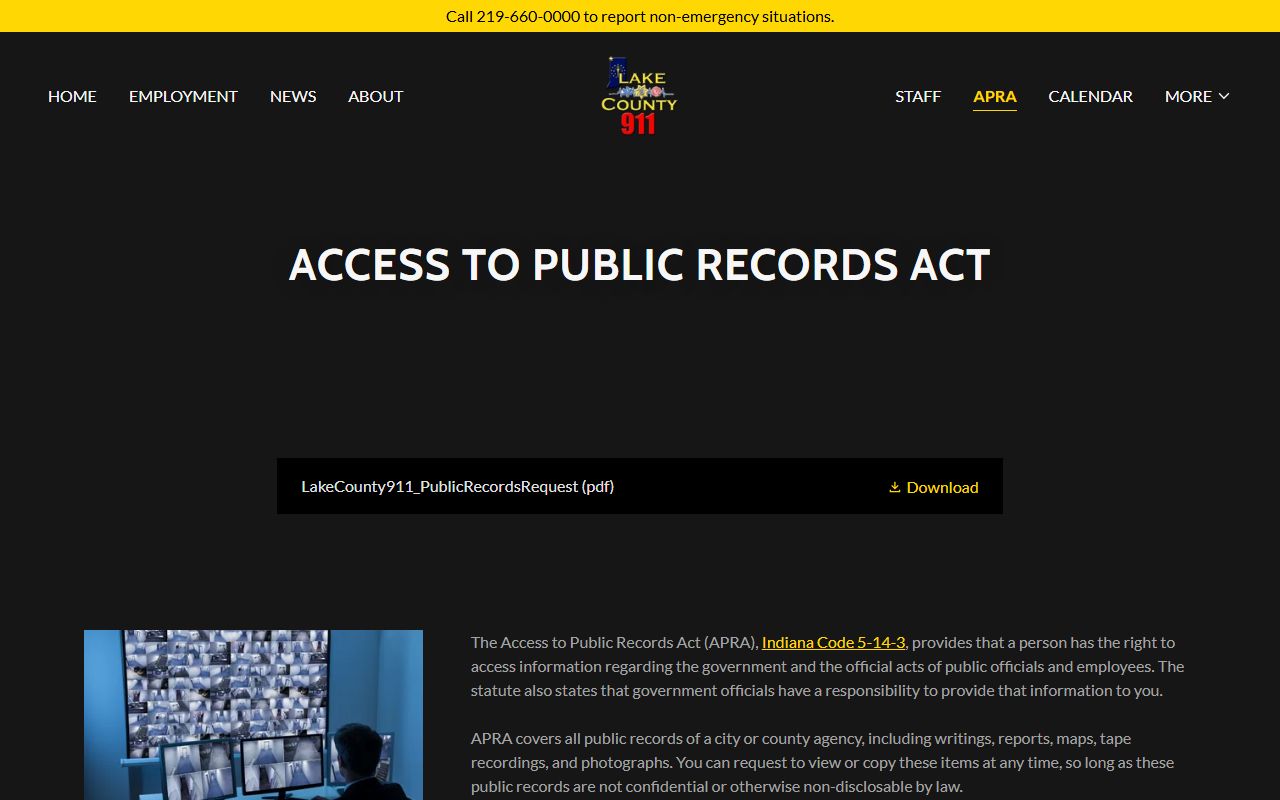
It is a useful local reference for how a Lake County agency handles the open-records law in practice.
Public Records Fees in Lake County
The open-records law lets agencies charge for copies and certain authorized costs, while inspection is generally free. Indiana Code 5-14-3-8 governs those fees. Specific copy fees are set by each office's schedule, so confirm them before you order. Some concrete agency fees are published and useful to know.
| Item | Amount |
|---|---|
| Sheriff background check | $7 |
| Sheriff accident report | $15 |
| Clerk credit card convenience fee | 3% |
| Copy fees (other records) | Set by each office under IC 5-14-3-8 |
The sheriff's background check and accident report fees are paid by cash or money order with valid ID, at the Bureau of Identification in Crown Point. Always ask an office for its current fee before ordering, since schedules can change and copy costs vary by record type.
Records That Are Exempt
Not everything is open. Indiana Code 5-14-3-4 lists confidential and discretionary exceptions, including law-enforcement investigatory records, medical records, attorney work product, and trade secrets. Court records have their own exclusions under the Indiana Rules on Access to Court Records, which keep juvenile, adoption, mental-health, and certain protected records out of public view.
Even when a record is partly exempt, the disclosable parts should still be released. The agency cannot withhold an entire file just because one section is protected.
Redactions in Lake County Records
Even an open record may arrive with parts blacked out. Agencies and courts redact certain data to protect privacy and safety. Common redactions include Social Security numbers, financial account numbers, medical information, and details that identify minors. In court files, victim addresses and confidential forms are removed under the access rules.
Redaction is not the same as a full denial. The agency takes out the protected pieces and releases the rest, so a redacted record is still a usable record. If you believe too much was removed from a record, you can raise the question with the agency or with the Public Access Counselor.
If Your Request Is Denied
If an agency denies a request or you think it violated the law, Indiana has a built-in remedy. The Public Access Counselor, established under Indiana Code 5-14-4, advises on open-records and Open Door Law disputes, and Indiana Code 5-14-5 sets out a formal complaint process. You can use that process after a denial or an alleged violation, and the counselor can issue an advisory opinion on whether the agency followed the law. Filing a clear, specific request in the first place reduces the chance of a dispute.
Free legal research tools can also help you understand how courts have handled access questions. CourtListener offers free opinions and dockets, though it is not the official record.
For binding answers, though, the Public Access Counselor and the agency that holds the record remain the authorities.