
What Probate Covers in Lake County
Probate is the court process for settling what a person leaves behind and for protecting people who cannot manage their own affairs. In Lake County it runs through the Lake Circuit Court and the Lake Superior Court civil and probate jurisdiction. The Circuit Court lists probate and guardianships among the matters it hears, and a Probate Commissioner, Jewell Harris, assists with these cases.
The clerk plays a central role. The Clerk of the Lake Circuit/Superior Court keeps the record of all wills and trust matters in probate proceedings, accepts filings, and issues certified copies. Probate touches estates, wills, guardianships of adults and minors, and trusts, so the records cover a wide range of family and financial situations.
The Circuit Court's broader civil docket helps explain where probate fits. The same court that hears divorce, child support, and major civil disputes also handles probate, guardianship, and tax-sale proceedings. Probate is one branch of that general civil jurisdiction, which is why a probate case carries the same kind of case number and docket as other Lake County court records.
Probate Terms Defined
Probate uses a vocabulary that trips up newcomers. A few definitions make the records easier to read.
- Testator
- A person who has made a valid will.
- Executor
- The person named in a will to carry out its terms.
- Intestate
- Dying without a valid will, so state law decides who inherits.
- Guardianship
- A court case naming someone to manage the care or property of another person.
- Conservatorship
- An arrangement to manage the finances of someone who cannot do so alone.
How to Search Lake County Probate Records
Probate cases are searched through Indiana MyCase, the statewide public access portal, just like other court records. You can search by case number or by the name of the decedent or a party. Filtering by Lake County and by case type helps narrow the results, which matters in a county this size where common surnames return many cases.
- Open the MyCase portal and choose the public case search.
- Enter a probate case number, or search by the decedent's or party's name.
- Filter by Lake County and a probate case type when shown.
- Open the case to read the docket, then request certified orders or letters from the clerk.
Note: Sensitive probate details, such as protected-person medical and financial information, may be restricted or redacted under the court-record rules.
Probate Courts in Lake County
Probate is heard in the county's general trial courts rather than a separate probate court. The Lake Circuit Court is the primary venue for estates and guardianships, and the clerk's main office handles the filings and certified copies. The contact card below covers the main court location.
Lake Circuit Court
2293 N. Main Street, Courtroom B203
Crown Point, IN 46307
(219) 755-3488
Clerk of the Circuit/Superior Court
2293 N. Main Street, 1st Floor
Crown Point, IN 46307
(219) 755-3460
Probate Filing Fees
The clerk publishes the probate filing costs by case-type code. The codes EU, EM, ES, GU, GM, and TR cover estates, guardianships, and trusts. The table lists the current fee.
| Item | Amount |
|---|---|
| Probate filing (EU, EM, ES, GU, GM, TR) | $177 |
| Optional sheriff service fee | $28 |
| Credit card convenience fee | 3% |
Counter filings are paid by cash or money order, while e-filed cases can use electronic payment. The clerk lists the case codes and costs on the Clerk Lake Circuit/Superior Court page.
What Lake County Probate Records Show
A probate file follows a case from opening to close. It can include the petition, the will, references to a death certificate, the heirs, an inventory of assets, creditor claims, notices, accountings, guardianship reports, and the orders and final report. Read in order, the docket shows how an estate or guardianship was settled.
The workflow is consistent. A petition opens the case, the clerk records it, the matter proceeds before the court or the Probate Commissioner, and the clerk issues certified orders, letters, or copies when the parties need them. Public docket activity can be tracked in MyCase when the record is open.
Steps in a Lake County Probate Case
Most probate cases follow a predictable path, whether they involve an estate, a guardianship, or a trust. Knowing the order helps you read a docket and know what to expect next. The steps below outline the typical flow.
- Identify the case type, such as an unsupervised or supervised estate, a guardianship, or a trust.
- Prepare the petition and supporting documents, with an attorney or self-help resources as needed.
- File with the Clerk of the Lake Circuit/Superior Court and pay the filing fee.
- The matter proceeds before the court's probate jurisdiction or the Probate Commissioner.
- Track public docket activity in MyCase as the case moves.
- Request certified orders, letters, or copies from the clerk when you need them.
An estate case adds inventories, creditor claims, and a final accounting, while a guardianship adds periodic reports on the protected person. The exact filings depend on the case type.
Wills, Estates, and Trust Matters
The clerk keeps the record of wills and trust matters in probate, which makes the office the anchor for these cases. When a person dies with a will, the estate is opened so the named executor can carry out its terms under court oversight. When there is no will, the estate is intestate, and Indiana law decides who inherits. Either way, the case runs through the same probate process.
Trusts and supervised estates can stay open longer because they involve ongoing management and accounting. The case codes the clerk uses, from EU through TR, sort these matters by type so the court and the clerk can track them. For an official copy of a will admitted to probate or an order appointing an executor, the clerk is the source, not the online portal. Heirs, creditors, and named executors are the people who most often need these certified documents to settle an estate.
Guardianship and Minor Cases
Guardianship is a large part of probate work, and it covers both adults who cannot manage their affairs and minors who need someone to act for them. Minor guardianships and child-welfare matters can overlap with cases handled through the Indiana Department of Child Services, which the county's Juvenile Division works with on CHINS proceedings.
The Department of Child Services explains its role on the Indiana DCS site.
Records that involve a minor's care are often restricted, so a guardianship file may show less publicly than an ordinary estate.
Restricted Probate Records
Probate files can hold private details, and the rules protect them. Medical and financial information about a protected person, along with minor guardianship details, may be restricted or redacted under the Indiana Rules on Access to Court Records. Adoption matters, which are assigned through the Juvenile Division, are confidential.
If a record you need is not visible online, contact the clerk, since some probate detail requires a clerk request rather than open public display. The clerk can tell you whether a file is simply not posted yet or is restricted by rule, which saves a wasted trip to the courthouse.
Related Lake County Programs
The same county portal that hosts the courts also links the county's social and corrections programs, which families sometimes encounter alongside a probate or guardianship matter. Lake County Community Corrections is one such department.
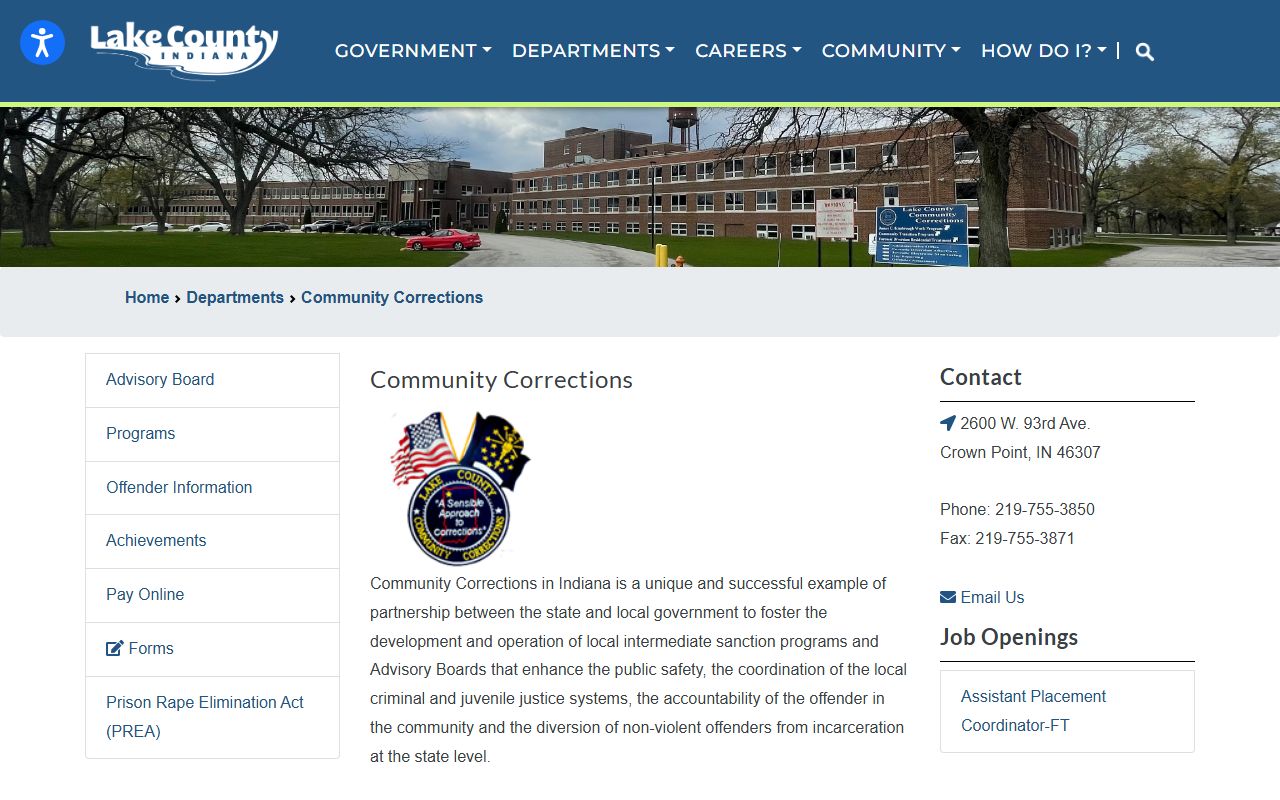
The county also runs the Community Transition Court, a certified reentry program under Community Corrections.
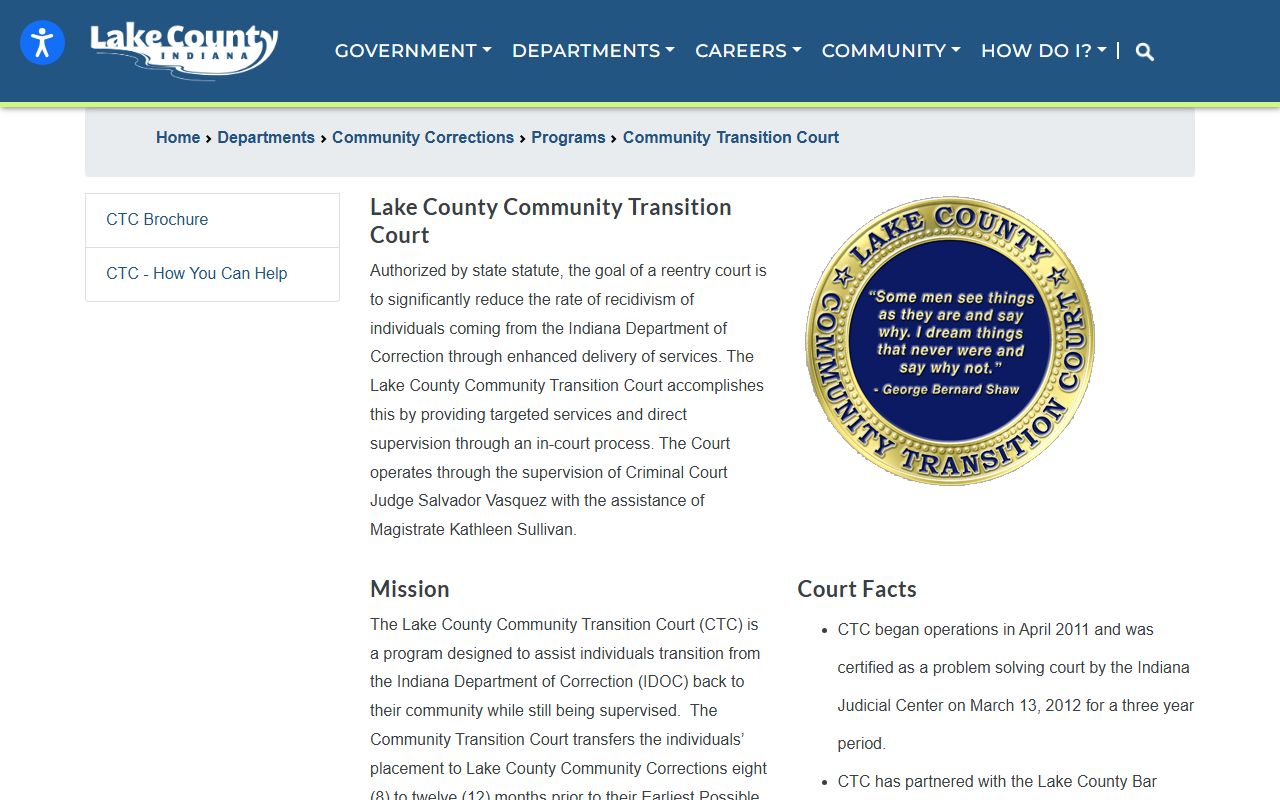
These programs sit outside probate, but they share the same county directory you use to reach the courts and the clerk.