
What Is a Court Docket in Lake County
A docket is the official timeline of a case. Each line marks one event: a complaint filed, a summons issued, a motion, an order, a hearing set, or a judgment entered. Read top to bottom, the docket shows how a case moved from its first filing to its outcome. It is not the same as the full case file. The docket lists the events; the file holds the actual documents behind each one.
In Lake County, dockets come from the Lake Circuit Court, the Lake Superior Court divisions, the Juvenile Division, and city and town courts. Indiana does not use a separate "district court" docket at the county level, so a Lake County docket search runs through the statewide court system rather than a county-built database. The same docket you read online is kept in fuller form by the clerk.
How to Find Lake County Dockets Online
Lake County dockets are searched through Indiana MyCase, the statewide public access portal. The county and the courts link to it directly. Open a case and the docket appears as a list of dated entries. The state also runs a payment and online-services portal that ties into the same system.
- Open the MyCase portal and choose the public case search.
- Pick Lake County and the court or case type when the filters appear.
- Enter a case number, or search by party name.
- Open the case and scroll the docket to read each entry in order.
Indiana's online court services, including case access and payments, sit on the Indiana courts online services page.
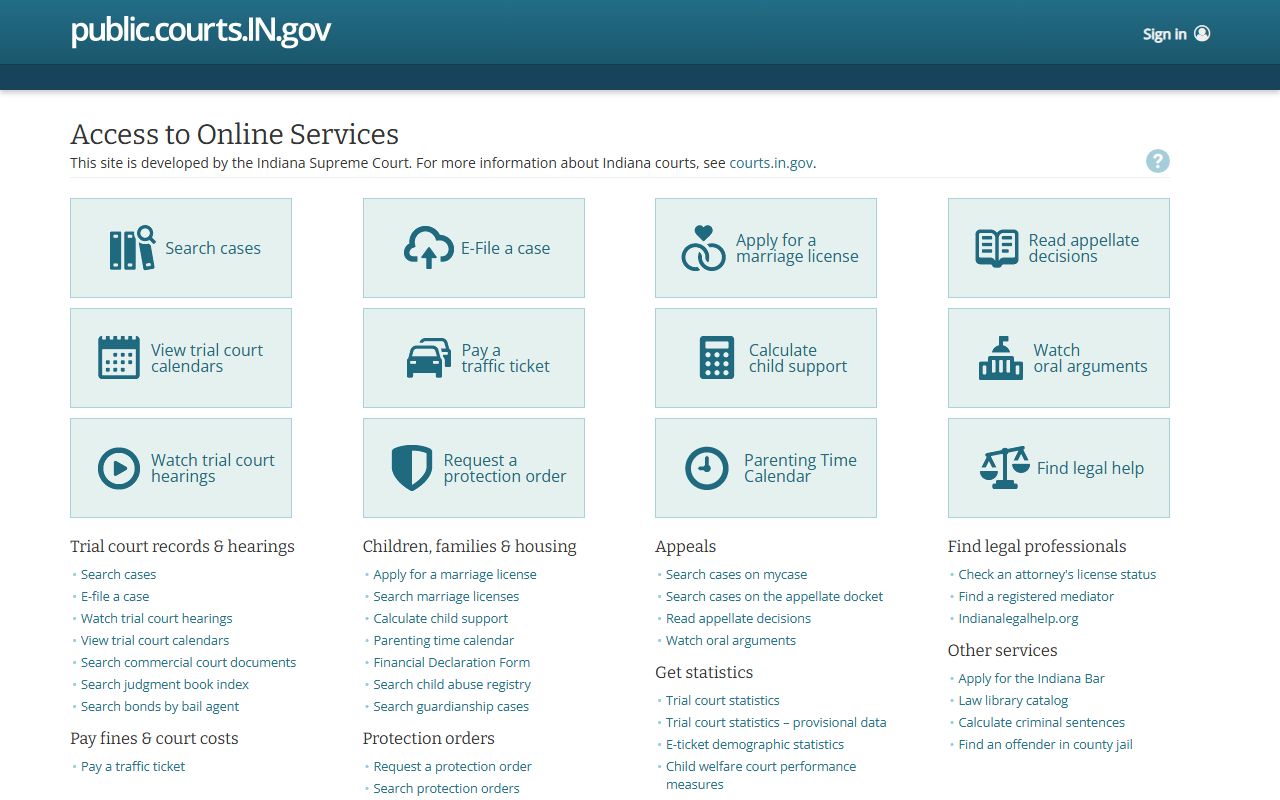
That portal feeds the same docket data you see when you open a Lake County case.
Sample Lake County Docket Entry
Each docket line follows a simple shape. It carries a date, the type of event, who filed it, and sometimes a link to the document. Learning the parts makes a long docket easy to scan. The table below breaks down a typical entry.
| Field | What It Shows |
|---|---|
| Entry Date | The date the filing or court action was recorded. |
| Event Type | The action, such as motion filed, order issued, or hearing set. |
| Party Filing | The party or attorney who submitted the filing. |
| Document Link | A link to the document when public access is allowed. |
Not every entry includes a document. Public document access varies by case type and user role, and some filings require a clerk request.
The case number that sits above the docket tells its own story. In Lake County it starts with 45, the state code for the county. The next characters name the court, the middle shows the year and month the case opened, the letters give the case type, and the final digits are the sequence. A number like 45C01-2601-PL-000001 reads as a Lake County civil plenary case. Knowing the format helps you confirm a docket belongs to the right case before you read a single entry.
Courts That Publish Dockets in Lake County
Most Lake County trial courts feed their dockets into the statewide portal. The Circuit Court and the Superior Court civil, county, and criminal divisions all post docket activity. The Juvenile Division handles cases that are largely closed to the public, so its dockets show little or nothing online. City and town courts vary.
- Lake Circuit Court - civil, divorce, probate, guardianship, and tax-sale dockets.
- Lake Superior Court - civil, county, criminal, and small claims dockets across Crown Point, Hammond, East Chicago, and Gary.
- Juvenile Division - CHINS, delinquency, paternity, and adoption matters, mostly restricted from public view.
- City and town courts - local ordinance and some traffic dockets.
The Juvenile Division explains its case types and judicial officers on the Juvenile Division judicial information page.
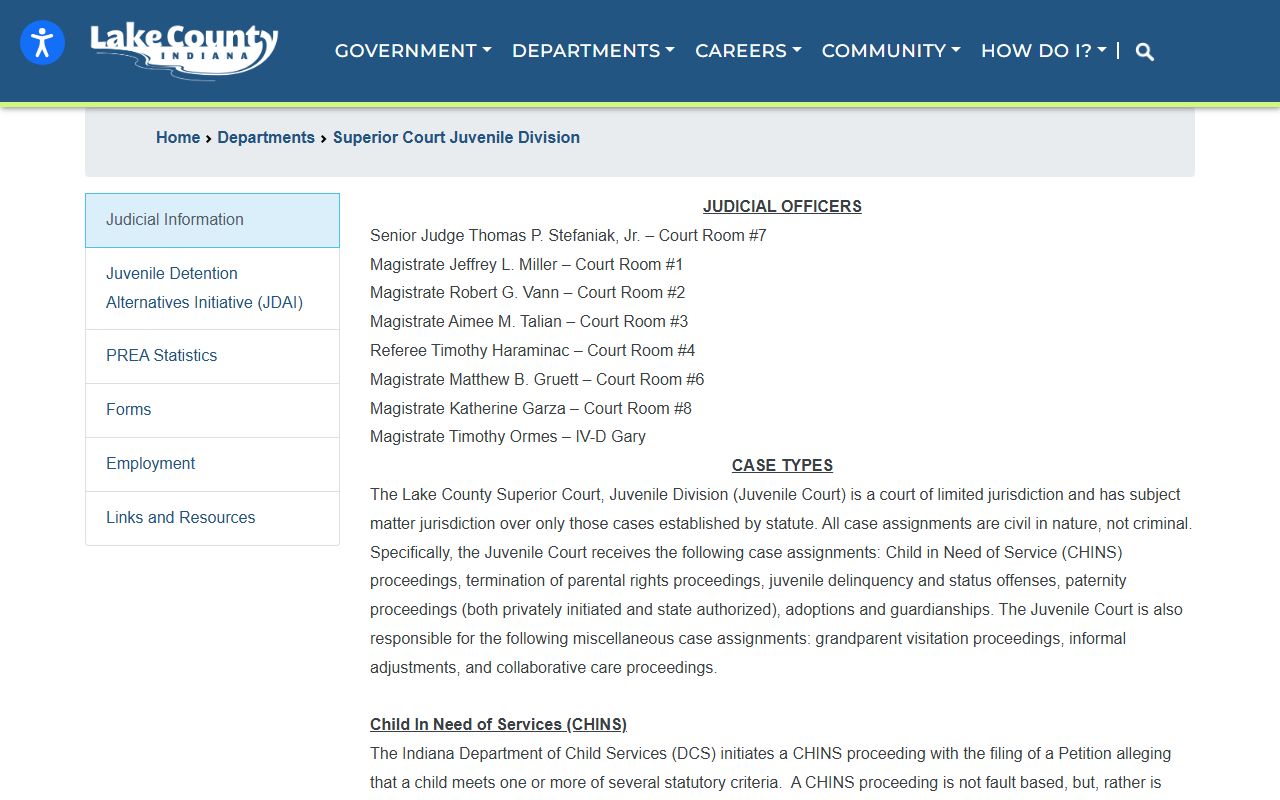
Because juvenile dockets are protected, those cases route through the court and the parties rather than the public portal.
Docket vs Full Case Record
People searching dockets often want the underlying documents too. The docket and the full record serve different needs, as the comparison shows.
| Docket | Full Case Record | |
|---|---|---|
| Format | List of dated entries | Full documents and filings |
| Access | Often online and free | May require a clerk request or a fee |
| Use | Track a case as it moves | Legal review, evidence, certified copies |
For the documents behind the entries, the Lake County court records page covers how to pull and certify a file. In short, use the docket to follow a case while it is active, and pull the full record when you need the actual orders, decrees, or judgments. Most people start with the free docket and only request documents when a specific filing matters.
Criminal, Civil, and Probate Docket Entries
Docket language shifts a little by case type, even though the format stays the same. A criminal docket logs the charging document, bond entries, the arraignment, plea, hearings, and the sentence. A civil docket tracks the complaint, service, motions, and the judgment. A probate docket follows the estate or guardianship from the opening petition through inventories, claims, and the final report.
The clerk's branch and city locations matter here, because a case heard in Hammond, East Chicago, or Gary is filed at that location even though the docket appears in the same statewide system. The clerk lists those offices on the clerk locations page.
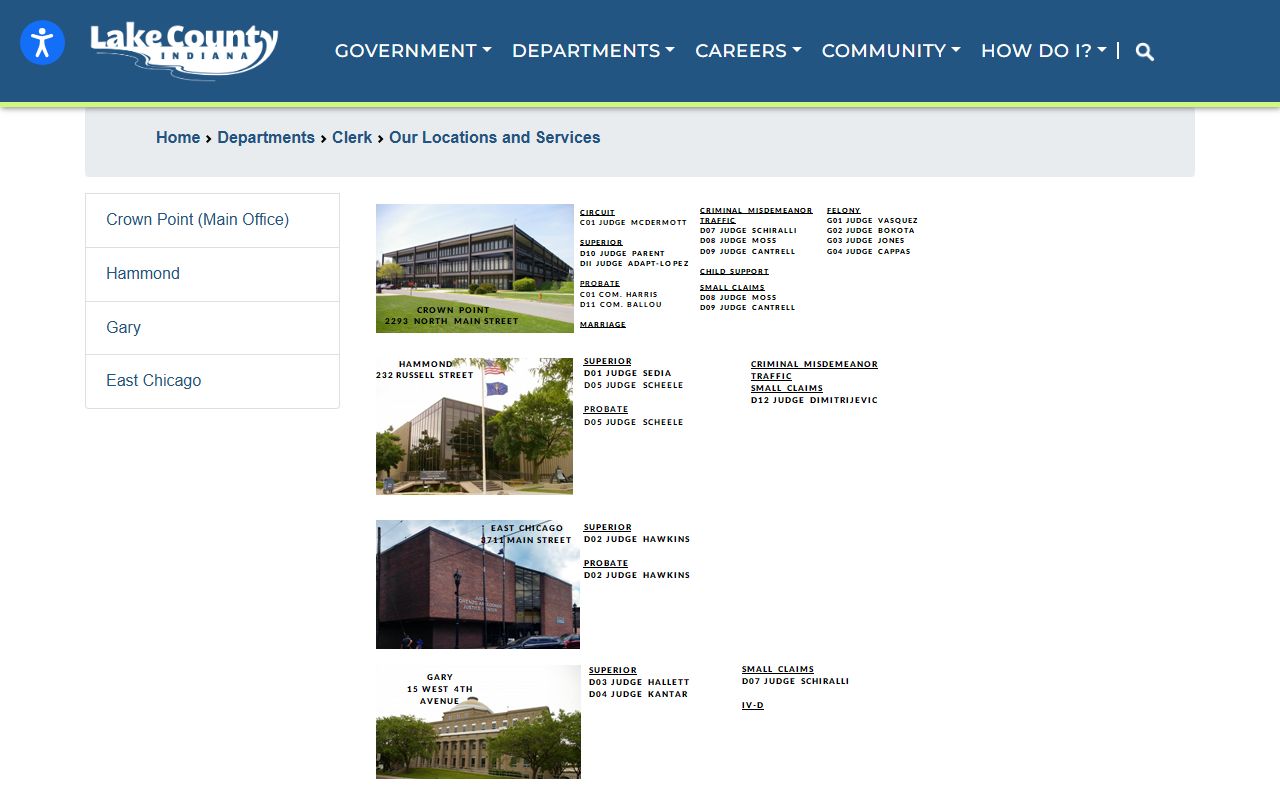
Knowing the filing location tells you which counter to call when a docket entry needs a document or a correction.
How to Read a Lake County Docket
Docket entries use shorthand. A "motion" is a written request to the judge. An "order" is the judge's ruling. "Service" means the court papers were delivered, and a "return of service" is the proof. A "continuance" pushes a hearing to a later date. The final lines usually carry the disposition and any judgment or sentence.
Watch the dates closely. The newest entry tells you where a case stands right now, while gaps between entries can signal a continuance or a pending motion. A "disposition" line marks the outcome, and a charge is only an accusation until a conviction or other finding appears. If an entry looks wrong or missing, the clerk holds the official version and can confirm it.
Note: The online docket is a public service and not the official record, so confirm any entry with the clerk before relying on it.
Hearings and Events on a Lake County Docket
Much of a docket is taken up by events. These are the scheduled and completed steps the court records as a case moves along. A hearing entry usually carries a date, a time, the courtroom or judicial officer, and the type of hearing. Other entries log paperwork rather than appearances. Together they let you predict what comes next in a case.
The most common entries you will see on a Lake County docket include the following.
- Complaint or charging document - the filing that opens the case.
- Summons issued and return of service - notice sent to a party and the proof it was delivered.
- Motion and order - a request to the judge and the ruling that follows.
- Hearing scheduled or continued - a court date set or pushed to a later day.
- Judgment, disposition, or sentence - the result that closes the case.
Criminal dockets add bond and payment entries, while civil and probate dockets lean on filings and orders. The pattern stays readable once you know the labels.
When a Lake County Docket Looks Incomplete
Online dockets can lag or leave gaps. A new filing may take time to post, and restricted matters such as juvenile, adoption, sealed, or expunged cases may show little or nothing. The portal also warns that its information is a public service, not the official court file, and may carry errors or omissions.
When a docket looks off, the clerk is the fix. The clerk keeps the full record and can tell you whether an entry is missing, sealed, or simply not yet entered. For a case filed in Hammond, East Chicago, or Gary, call that branch counter; for Crown Point matters, use the main office. A short call often clears up what the online docket cannot show, and the clerk can also tell you whether a missing document is sealed or just not yet scanned into the system.