
How to Search Lake County Traffic Court Records
Traffic and infraction cases are searched through Indiana MyCase, the statewide public access portal, and paid through the state court payment service. The county and the sheriff both link traffic-ticket payment to the state court site. A citation or case number is the fastest way in, since traffic matters can be tied to a specific ticket.
- Open the MyCase portal and choose the public case search.
- Enter the citation or case number from your ticket, or search by name.
- Filter by Lake County and an infraction or traffic case type.
- Open the case to read the offense, court date, fines, and payment status.
To pay a ticket, the state court online services page handles traffic payments for participating courts at the Indiana courts portal.
Which Courts Handle Traffic Cases in Lake County
Traffic cases are split between the county court system and local courts. The Lake Superior Court County Division handles county-level matters, while city and town courts handle local ordinance and some traffic cases. Operating while intoxicated is criminal and routes to the Criminal Division. The table shows the split.
| Court | Traffic Cases Handled | Location |
|---|---|---|
| Superior Court County Division | Infractions and county-level traffic matters | Crown Point and Hammond |
| City and Town Courts | Local ordinance and some traffic cases | Specific city or town |
| Superior Court Criminal Division | Operating while intoxicated and criminal traffic | Crown Point |
Note: Where a case is heard depends on the offense and the citing agency, so the citation tells you which court to expect.
Types of Traffic Cases on Record
Traffic matters fall into two broad groups. Most everyday tickets are infractions, which are noncriminal violations. More serious conduct can be charged as a crime. The list sorts the common types.
- Infractions - speeding, equipment, and most moving violations handled as civil matters.
- Local ordinance violations - cases brought under a city or town code.
- Misdemeanor traffic - offenses like driving while suspended, depending on the facts.
- Operating while intoxicated - a criminal charge, covered with arrest records.
The line between an infraction and a crime matters, because criminal traffic carries different rights, penalties, and record consequences.
What Lake County Traffic Court Records Show
A traffic case record reads much like any court file, with fields specific to a citation. It links the ticket to the offense, the court date, and any fine or payment. The table lists the fields you can expect.
| Field | What It Shows |
|---|---|
| Citation Number | The number on the ticket tying it to the case. |
| Offense | The violation charged, such as a speed or equipment infraction. |
| Statute or Ordinance | The law or local code the citation cites. |
| Court Date | The scheduled hearing or appearance date. |
| Plea or Payment | How the case was answered or resolved. |
| Fines and Costs | The amount owed and the payment balance. |
| Disposition | The outcome of the case. |
Searching by Citation Number vs by Name
You can search a traffic case two ways, and the citation number is the better option when you have it. A name search works but can return many results in a county this size. The table shows the main search fields on the portal.
| Search Field | Type | Required | Notes / Format |
|---|---|---|---|
| Citation Number | Text | No | From the ticket; fastest route to a single case. |
| Case Number | Text | No | Indiana format starting with 45 for Lake County. |
| Party Name | Text | No | Last and first name; narrow common names. |
| Court / Location | Dropdown | No | Choose Lake County or a specific court. |
Paying or Contesting a Lake County Traffic Ticket
A ticket gives you a choice: pay it or contest it. Paying an infraction usually admits it, while contesting means appearing or asking for a hearing. The basic steps are below.
- Find your case in MyCase using the citation or case number.
- To pay, use the state court online payment service for participating courts.
- To contest, follow the citation's instructions to appear or request a hearing.
- Consider the Lake County Prosecutor's Infraction Deferral Program if you qualify.
- Keep proof of payment or the court's order once the case is resolved.
The prosecutor runs an Infraction Deferral Program among its public programs, which can be an option for eligible drivers.
Public Access Laws for Traffic Court Records
Traffic court records are court records, so they follow the Indiana Rules on Access to Court Records and are public unless excluded. The general access rule keeps these matters open, while the open-records law, Indiana Code 5-14-3, governs related agency records. Most traffic cases are routine and openly viewable in the portal.
Note: The online record is a public service and not the official court file, so confirm a traffic case with the clerk before relying on it.
Court Traffic Records vs State Driver Records
This is the distinction that confuses most people. The court traffic record is the case itself, held by the court. The driving record is a separate file kept by the state motor vehicle agency, showing license status and points. They are different records from different sources.
| Record Type | Source | What It Shows | How to Access |
|---|---|---|---|
| Court traffic record | The court | The case, plea, fines, and disposition | Indiana MyCase and the clerk |
| State driving record | State motor vehicle agency | License status, points, and history | The state motor vehicle agency |
To fix an error, you go to the source. A case error is corrected through the court and clerk, while a license or points issue goes to the state motor vehicle agency.
CDL and Commercial Driver Records
Commercial drivers face stricter rules. A violation that is minor for a regular license can carry heavier consequences for a commercial driver's license, and some resolutions that hide a ticket from an ordinary record are not allowed for CDL holders. The court case still appears in MyCase, but the license effects are tracked on the state driving record rather than the court file. CDL holders should be cautious about pleas that seem convenient but affect their license.
OWI and DUI Cases
Operating while intoxicated, often called OWI or DUI, is not an ordinary traffic matter. In Indiana it is charged as a crime and routes to the Superior Court Criminal Division, not the infraction docket. That means arrest, booking, and a criminal case file rather than a simple ticket. For how those cases work, see Lake County arrest records, which covers booking, charges, and the criminal court process.
Deferral and Defensive Driving Options
Some drivers can keep an infraction off their record through a deferral. The Lake County Prosecutor's Infraction Deferral Program is one route, allowing eligible drivers to resolve a ticket without a conviction on certain terms. Deferral is not automatic, and eligibility depends on the offense and the driver's history.
Because a deferral changes how a case ends, it can affect both the court record and the driving record. Confirm the terms before you agree, especially if you hold a commercial license, since the usual deferral benefits may not apply.
Sealing or Expunging Traffic Records
Most traffic infractions are civil rather than criminal, so the criminal expungement law applies mainly to criminal traffic matters like operating while intoxicated. Indiana Code 35-38-9 governs expungement of eligible criminal records, with a petition filed through the clerk in the county of conviction. A routine paid infraction is handled differently from a criminal case.
If you have a criminal traffic conviction you want addressed, the path runs through the same expungement process described on the arrest records page, with waiting periods and eligibility rules that depend on the offense.
Fees for Traffic Record Copies
Fines and court costs vary by offense and are set in the individual case, so a single ticket amount cannot be listed here. Copy fees for records are set by the clerk's schedule. The table lists the related, published fees.
| Item | Amount |
|---|---|
| Certified copy of a court record | Set by clerk schedule under IC 5-14-3-8 |
| Sheriff accident report | $15 |
| Credit card convenience fee | 3% |
| Traffic fines and court costs | Set per case by the court |
For an accident report tied to a traffic incident, the sheriff's Bureau of Identification handles requests for a fixed fee, separate from any court fine.
Higher and Federal Courts
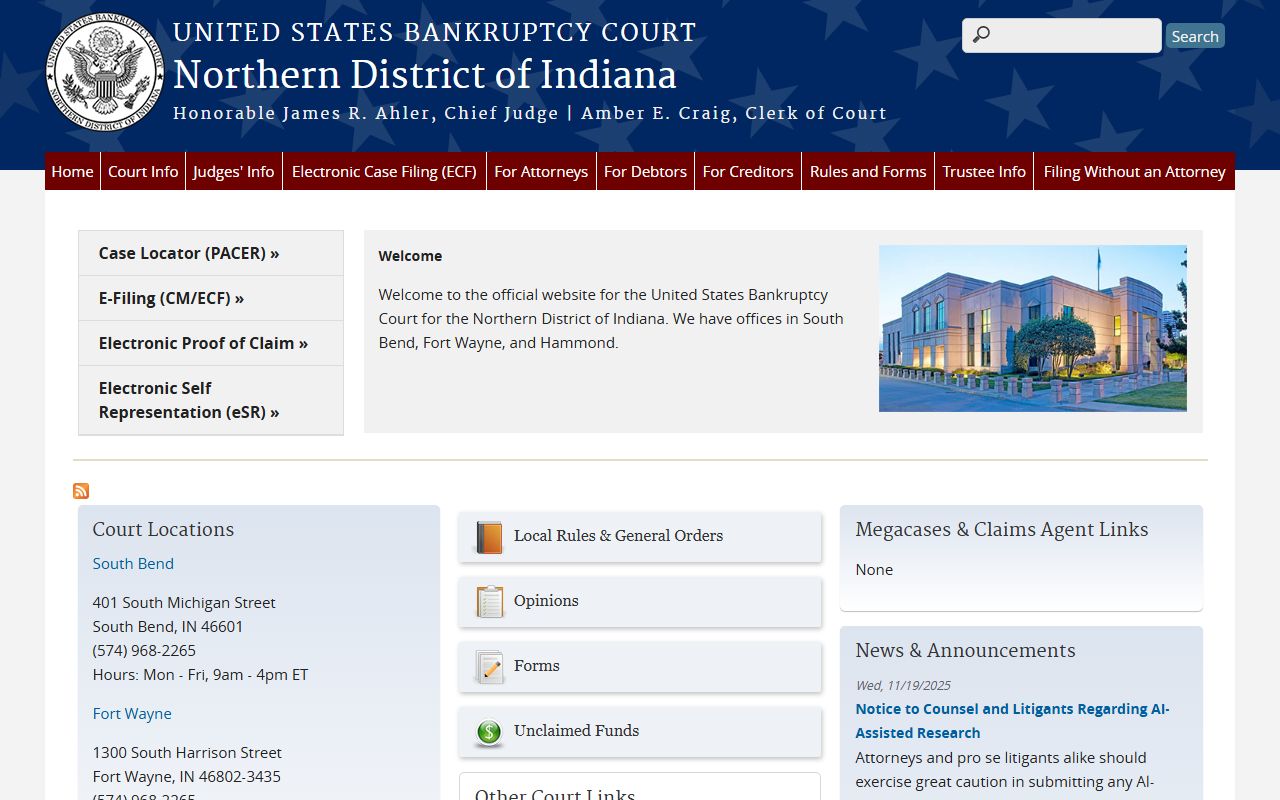
Ordinary traffic cases stay in the local courts, but it helps to know where matters go beyond them. Bankruptcy, federal crimes, and federal appeals are handled by separate courts that do not deal with local traffic tickets. The U.S. Bankruptcy Court for the Northern District of Indiana is one such court.
Appeals from the federal district court go to the U.S. Court of Appeals for the Seventh Circuit.
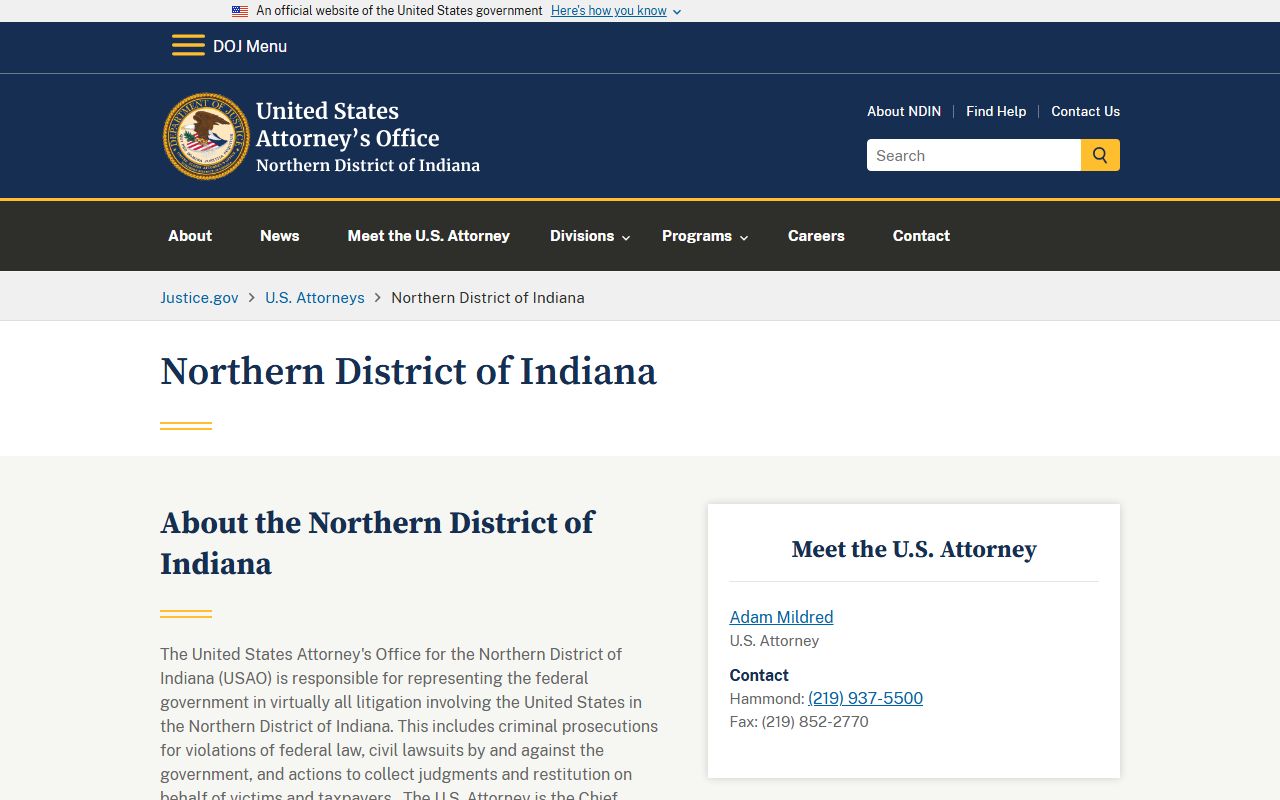
Federal prosecutions in the area are handled by the U.S. Attorney for the Northern District of Indiana.
None of these federal courts handle a Lake County traffic ticket, but they round out the picture of where cases can go.